 MTP Course
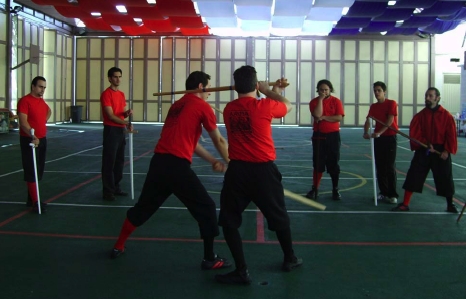
1.0 - Longsword Foundation MTP Course
1.0 - Longsword Foundation
Suited
to all students seeking a firm grounding in the martial arts of
Renaissance Europe, but ideal for every practitioner, this introduction
covers primary fundamentals of
unarmored long-sword. This seminar features an inclusive
holistic interpretation of material for "fighting with the
sword" unarmored from the leading German and Italian masters of the
15th and 16th centuries. It establishes the basis for all Renaissance
martial arts study. Components
include: basic
principles and key concepts of timing, range, leverage, stances and
warding, posture and gripping, displacing, core movements and
steeping, strikes and counter-strikes,binding and winding, and
Meisterhau, plus essential terminology and central practice routines for
training under the ARMA
Study Approach. Included
is the basis of
our essential Armatura drills and exercises of the
ARMA system. Presented in a simple, concise, and effective historical
structure, this course prepares the practitioner for Scholar rank
certification as a longsword Adept, but is intended to be repeated as
much as necessary by any ARMA student.
 MTP
Seminar
1.1 - Longsword Progression MTP
Seminar
1.1 - Longsword Progression
Building from MTP 1.0, this course focuses
on individual skill development and proficiency in comprehension of
core elements
and application of key fighting techniques. Intended more for long-term
oriented
practitioners seeking eventual instructor-level certification from
ARMA, it stresses self-training and use of proper intent in actions.
This session
also prepares the student for eventual Free Scholar rank
in Prize Playing with the longsword.
Content includes:
- Using the Armatura (conditioning exercises and
drills) for improving understanding
of distance, timing, leverage, covering, strength, agility, control,
and fluidity in actions
- Developing Floryshe
routines
- Introduction to trapping
and disarming techniques
- Half-Swording Fundamentals
- Free-Play / sparring with wasters and
featherswords / blunt practice weapons (unhelmed & unarmored)
- Development of strong, fluid, and unpredictable
technique
- Comprehension of core principles
- Proficiency in the Meisterhau
- Safely using grappling and wrestling moves
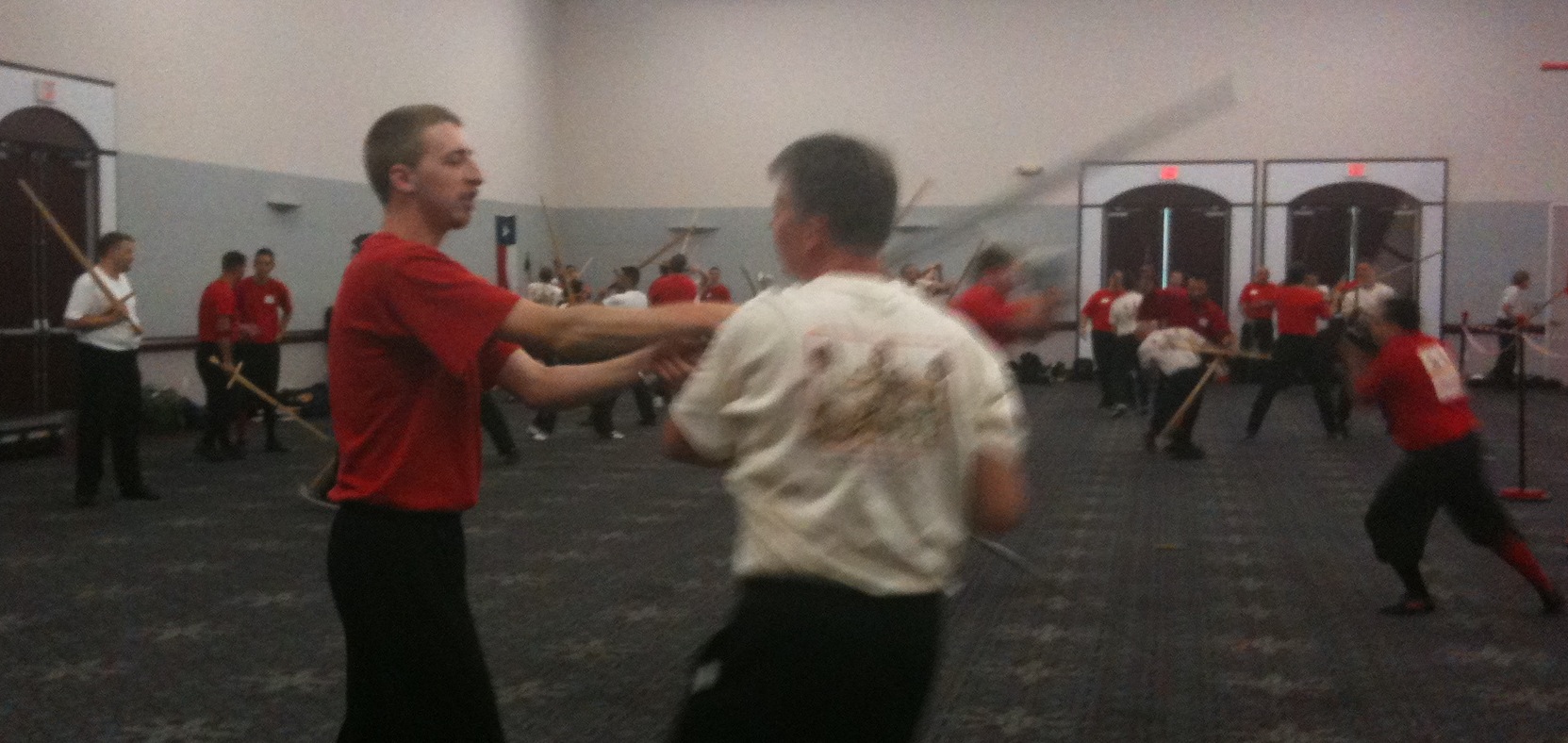 Following
this, additional Progression courses may be undertaken that offer
material extending from the fundamentals to incorporate more specific
teaching of
historical source works. Content of additional progress courses may
continue with: Improving form and Fighting Tactics,
Proficiency in closing and disarming, Key grappling holds and
takedowns, Test-cutting
with sharps, Introduction to armored swordplay,
facing long-staffs & spears, Fighting multiple opponents,
Facing
two-handed and single-hand swords, Facing shields &
bucklers,and
dagger vs. long-sword. Further
Progression courses
consists of advanced lessons in preparation for Free-Scholar Prize
Playing or more. Subsequent sessions tailored to the individual student
or Study Group may be repeated as desired. Following
this, additional Progression courses may be undertaken that offer
material extending from the fundamentals to incorporate more specific
teaching of
historical source works. Content of additional progress courses may
continue with: Improving form and Fighting Tactics,
Proficiency in closing and disarming, Key grappling holds and
takedowns, Test-cutting
with sharps, Introduction to armored swordplay,
facing long-staffs & spears, Fighting multiple opponents,
Facing
two-handed and single-hand swords, Facing shields &
bucklers,and
dagger vs. long-sword. Further
Progression courses
consists of advanced lessons in preparation for Free-Scholar Prize
Playing or more. Subsequent sessions tailored to the individual student
or Study Group may be repeated as desired.
MTP
Seminar 2.0 - Single-Sword
/ Sword & Dagger
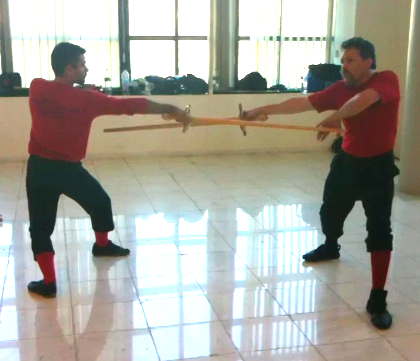 Prerequisite: MTP 1.0. Introduction to Renaissance
military cut-and-thrust swordplay of the side-sword (shorte-sword,
field sword,
and 16th century arming sword). Aimed at students seeking a firmer
background in historical fencing skills,
but ideal
for every practitioner, this material covers the 16th century
style of unarmored fencing with slender tapering
single-hand blades, as well as back-swords. Discover the origins of the
weapon, its
application, and its relationship to the rapier as you learn about
these major Renaissance
sword forms and
their misunderstood fighting style. Building on the
holistic simplicity of earlier methods of swordplay, course content
includes: 16th century
sources, the geometry of warding and stepping, basic
stances and footwork, fundamental
cut-and-thrust attacks and counter-attacks, cutting versus thrusting,
seizures and closing,
facing double-hand swords and pole-arms, as well as core drills,
exercises, and practice routines. Emphasis is also placed on
coordinating the sword with the dagger in defense and combination
attacks. The course is also structured so that both new and
returning students benefit form participation. Prerequisite: MTP 1.0. Introduction to Renaissance
military cut-and-thrust swordplay of the side-sword (shorte-sword,
field sword,
and 16th century arming sword). Aimed at students seeking a firmer
background in historical fencing skills,
but ideal
for every practitioner, this material covers the 16th century
style of unarmored fencing with slender tapering
single-hand blades, as well as back-swords. Discover the origins of the
weapon, its
application, and its relationship to the rapier as you learn about
these major Renaissance
sword forms and
their misunderstood fighting style. Building on the
holistic simplicity of earlier methods of swordplay, course content
includes: 16th century
sources, the geometry of warding and stepping, basic
stances and footwork, fundamental
cut-and-thrust attacks and counter-attacks, cutting versus thrusting,
seizures and closing,
facing double-hand swords and pole-arms, as well as core drills,
exercises, and practice routines. Emphasis is also placed on
coordinating the sword with the dagger in defense and combination
attacks. The course is also structured so that both new and
returning students benefit form participation.
MTP Seminar
2.1 - Sword & Buckler
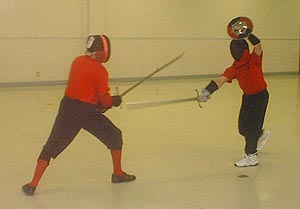 Required
Prerequisite: MTP 1.0. Content covers the
distinction in the unarmored use of earlier 14th and 15th century
arming swords or short swords as well as the messer / falchion, both
alone and with the buckler or small rondel. Emphasis is
placed on the similarity and differences to methods of double-hand
swords as well as the skills of coordinating two weapons. Other
material includes tactics and techniques for facing the sword &
dagger, great-sword, polearms, and larger shields.
The course intentionally relates teachings on this fighting
style to those the longsword as a way of more easily integrating skills
together. The course
also prepares the student for eventual Prize Playing for
Free-Scholar rank or above with the sword and buckler. Required
Prerequisite: MTP 1.0. Content covers the
distinction in the unarmored use of earlier 14th and 15th century
arming swords or short swords as well as the messer / falchion, both
alone and with the buckler or small rondel. Emphasis is
placed on the similarity and differences to methods of double-hand
swords as well as the skills of coordinating two weapons. Other
material includes tactics and techniques for facing the sword &
dagger, great-sword, polearms, and larger shields.
The course intentionally relates teachings on this fighting
style to those the longsword as a way of more easily integrating skills
together. The course
also prepares the student for eventual Prize Playing for
Free-Scholar rank or above with the sword and buckler.
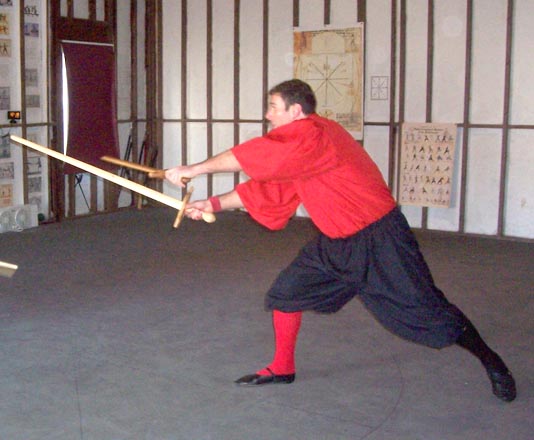 MTP Seminar
2.2 - Cut &
Thrust Progression MTP Seminar
2.2 - Cut &
Thrust Progression
Required
Prerequisite: MTP 2.0. For
returning students, this course builds on earlier instruction but
focusing more on proficiency in techniques, comprehension of
concepts, and individual skill development. Intended
more for long-term
oriented practitioners seeking higher rank certification, content
covers application and integration of actions and moves in
free-play, facing dissimilar
weapons, as well
as advanced
training dynamics. The
course prepares the student for eventual Prize Playing for
Free-Scholar rank or above with the sword and dagger. Subsequent
sessions tailored to the individual student or Study Group may be
repeated as desired.
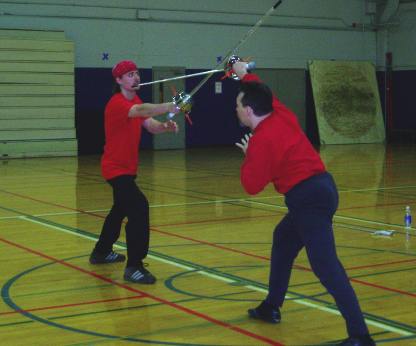 MTP Seminar
3.0 - Rapier Foundation MTP Seminar
3.0 - Rapier Foundation
Recommended Prerequisite: MTP 1.0 and
2.0. As an introduction to Renaissance civilian swordplay of
foyning fence this course includes
fundamentals of thrusting attacks, foundational
footwork, voids and parries, second-hand use, closing and
entering, trapping
and disarms, proper use of cuts, and combination techniques
with the dagger,
as well as the rapier versus the side sword and
longsword. Material is presented in a simple, concise, and
effective historical structure that demystifies this unique weapon
while connecting to the larger methods of Renaissance fighting
arts. Content covers: rapier
origin and anatomy, gripping,
source literature foundation, basic
stances and footwork,
defense fundamentals,
essential thrusting strikes and edge blows, second-hand
use, closing in and seizures, key thrusting exercises and footwork training.
MTP Seminar
3.1 Rapier Skills Progression
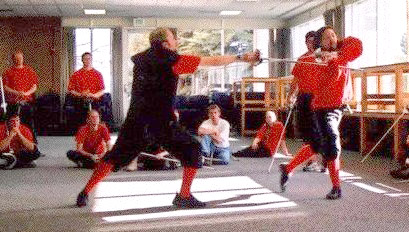 Prerequisite: MTP 3.0. For
returning students, this course builds on earlier instruction but
focusing more on proficiency in techniques, comprehension of
concepts, and individual skill development. Material
includes: grappling techniques in rapier combat, rapier versus swords,
tactics of foyning fence, and rapier
free-play essentials. The course also prepares the student for eventual
Prize Playing for
Free-Scholar rank or above with the rapier / rapier and dagger.
Subsequent
sessions tailored to the individual student or Study Group may be
repeated as desired. Prerequisite: MTP 3.0. For
returning students, this course builds on earlier instruction but
focusing more on proficiency in techniques, comprehension of
concepts, and individual skill development. Material
includes: grappling techniques in rapier combat, rapier versus swords,
tactics of foyning fence, and rapier
free-play essentials. The course also prepares the student for eventual
Prize Playing for
Free-Scholar rank or above with the rapier / rapier and dagger.
Subsequent
sessions tailored to the individual student or Study Group may be
repeated as desired.
 MTP
Seminar
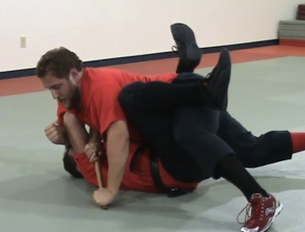
4 - Renaissance Grappling & Dagger Fighting MTP
Seminar
4 - Renaissance Grappling & Dagger Fighting
Recommended
Prerequisite: MTP 1.0. The core fundamentals of unarmed combat -- Ringen
/ Abrazare -- principles and
techniques up to and including closure, take downs, joint locks, submission
holds, from 14th - 17th century sources. Fundamentals of 14th
- 16th century European close-combat techniques for fighting with rondel
and edged daggers. Program arranged on request.
 Skill
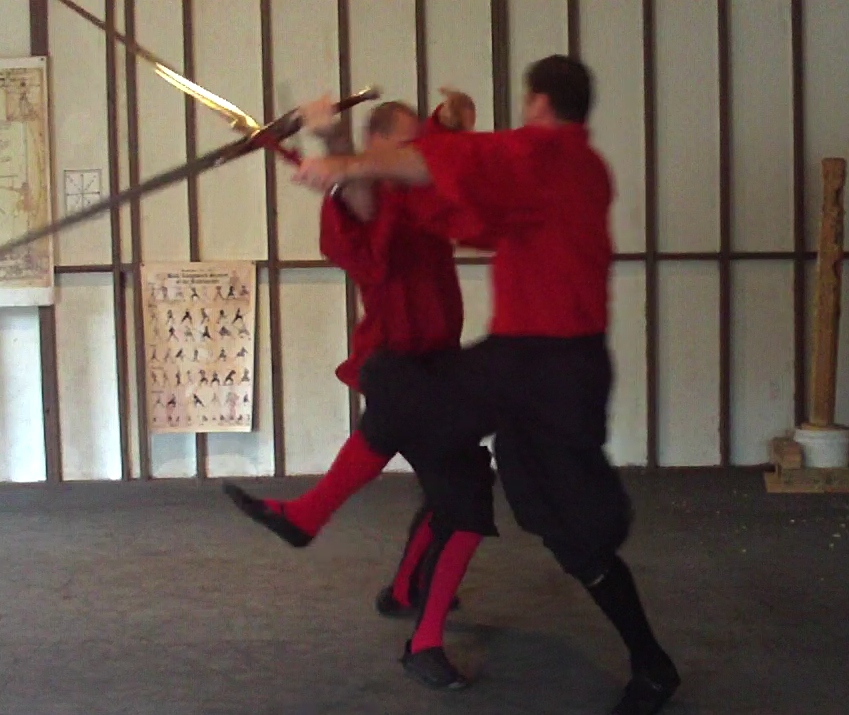
Assessment Sessions and Private Tutoring – An examination
for ranking certification available to eligible students having successfully
completed prerequisite courses. Additional senior-level classes are designed
to certify the student in teaching the ARMA system of historical fencing
study up to their current proficiency rating in all study areas. Scheduling
by appointment. Prerequisite: MTP 1 and one other course. Skill
Assessment Sessions and Private Tutoring – An examination
for ranking certification available to eligible students having successfully
completed prerequisite courses. Additional senior-level classes are designed
to certify the student in teaching the ARMA system of historical fencing
study up to their current proficiency rating in all study areas. Scheduling
by appointment. Prerequisite: MTP 1 and one other course.
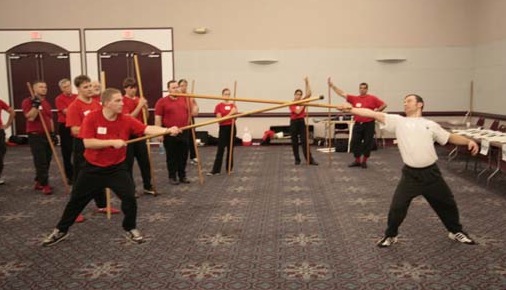 Historical
Source Classes –
Special classes are frequently scheduled to cover in-depth the
teachings of any one particular Master of Defence or the material of
one specific source work from the period, such as the Walpurgis Manual, Fiore
Dei Liberi, Camillo Agrippa, Giacomo Di Grassi, Joachim Meyer, Salvatore
Fabris, George Silver, Vincentio Saviolo, Capo Ferro, etc. Other
classes may cover individual weapons such as the polaxe, the staff,
dagger, messer, or spear. Programs arranged on request. Historical
Source Classes –
Special classes are frequently scheduled to cover in-depth the
teachings of any one particular Master of Defence or the material of
one specific source work from the period, such as the Walpurgis Manual, Fiore
Dei Liberi, Camillo Agrippa, Giacomo Di Grassi, Joachim Meyer, Salvatore
Fabris, George Silver, Vincentio Saviolo, Capo Ferro, etc. Other
classes may cover individual weapons such as the polaxe, the staff,
dagger, messer, or spear. Programs arranged on request.
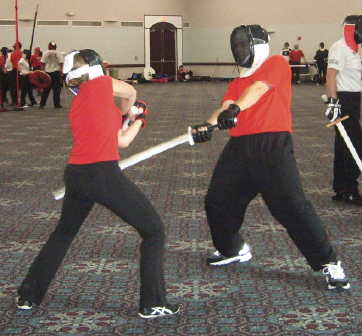 The ARMA
MTP workshops
provides for a safe, realistic, and practical opportunity for students
and enthusiasts to engage in historical fencing activities.
After teaching this subject on and off
in
both public and private classes since 1992, full-time historical
fencing researcher and ARMA senior instructor, John Clements,
Director of ARMA,
offers these comments: The ARMA
MTP workshops
provides for a safe, realistic, and practical opportunity for students
and enthusiasts to engage in historical fencing activities.
After teaching this subject on and off
in
both public and private classes since 1992, full-time historical
fencing researcher and ARMA senior instructor, John Clements,
Director of ARMA,
offers these comments:
“...We
have developed in ARMA a proven system through our approach, our
methodology, our interpretations of the sources, and our martial
spirit. It produces quick
results and real self-defense skills. It enables a student to
grasp the core fundamentals
of the historical teachings that leads to genuine ability. But its real
strength lies in giving the student the tools to effectively teach
themselves...”
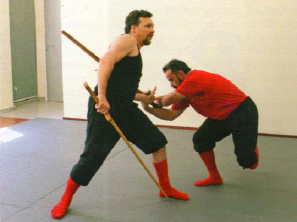 To
be re-constructed and revived properly today it is only logical that
the skills of Renaissance combat arts must –must
–be performed in earnest, with energy and speed and we must make the
effort to practice them in this way. This doesn’t
come at first and has to be developed over time. The degree to which
each student achieves it may vary. While other organizations may focus
more on the pageantry and role-playing of knightly tournaments or on
the “deportment” of proper “technical exchanges” within a conception of
gentlemanly duels, ARMA does not. Although these may be
historical approaches, we feel such things are more ritual than martial
and that ritual combats of the period were far outweighed by real
fighting. The ARMA believes understanding of
Medieval and Renaissance fencing
must involve much more than simply posing and “dancing” with a weapon,
or scoring imaginary “points” in a game, and certainly far more than
artistically “faking” a fight. To demonstrate sound fighting
skills with documented historical techniques requires not choreography,
nor 19th century duelling styles, but real self-defense
ability and historical authenticity. To
be re-constructed and revived properly today it is only logical that
the skills of Renaissance combat arts must –must
–be performed in earnest, with energy and speed and we must make the
effort to practice them in this way. This doesn’t
come at first and has to be developed over time. The degree to which
each student achieves it may vary. While other organizations may focus
more on the pageantry and role-playing of knightly tournaments or on
the “deportment” of proper “technical exchanges” within a conception of
gentlemanly duels, ARMA does not. Although these may be
historical approaches, we feel such things are more ritual than martial
and that ritual combats of the period were far outweighed by real
fighting. The ARMA believes understanding of
Medieval and Renaissance fencing
must involve much more than simply posing and “dancing” with a weapon,
or scoring imaginary “points” in a game, and certainly far more than
artistically “faking” a fight. To demonstrate sound fighting
skills with documented historical techniques requires not choreography,
nor 19th century duelling styles, but real self-defense
ability and historical authenticity.
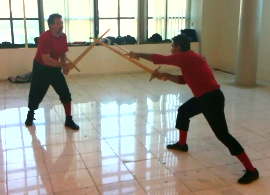 In
ARMA,
we have a set curriculum of study and
frequently present Member seminars and workshops in various cities
when are
arranged there by local members or other interested
parties. We have an established skills certification
program for
testing members seeking recognition within our curriculum.
Testing for ranking follows a set standard of required skills and
knowledge laid out in Study Sheets. Essentially, each individual
Associate Member or Study Group pursues the curriculum for core skills
and specific weapons as they can, and as they see fit, from their own
personal interest and or any official instruction they have received at
official ARMA events as well as guidance from our member online
training materials. In
ARMA,
we have a set curriculum of study and
frequently present Member seminars and workshops in various cities
when are
arranged there by local members or other interested
parties. We have an established skills certification
program for
testing members seeking recognition within our curriculum.
Testing for ranking follows a set standard of required skills and
knowledge laid out in Study Sheets. Essentially, each individual
Associate Member or Study Group pursues the curriculum for core skills
and specific weapons as they can, and as they see fit, from their own
personal interest and or any official instruction they have received at
official ARMA events as well as guidance from our member online
training materials.
The
primary sources for
our MTP curricula include but are not limited to:
- The MS.
I.33 Sword and Buckler text of c.
1285
- The
Liechtenauer Tradition - 14th - 15th
century teachings of
the German Fechtmeisters
- The
15th century Italian Masters: Fiore Die
Liberi & Filippo Vadi
- The teachings of early 16th
century Italian masters such as Achille Marozzo among others
- The Teachings
of Giacomo Di Grassi, 1570
- The
Kunst de Fechten of Fechtmeister
Joachim Meyer, 1560-1570
- English
and Italian sources on 16th and 17th century Rapier teachings,
such as Salvatore Fabris and Capo Ferro
- The
Compiled Teachings of Paulus Hector
Mair's compendia, c.1540
- The
Grappling and Combat Wrestling from15th
and 16th century guidebooks
- Dagger
Fighting from 15th and 16th century manuals
And many,
many more...
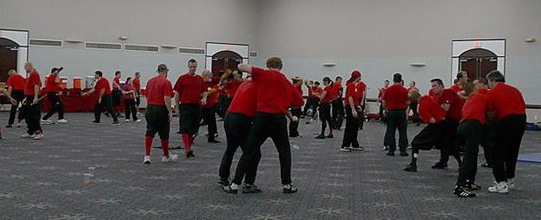
|
